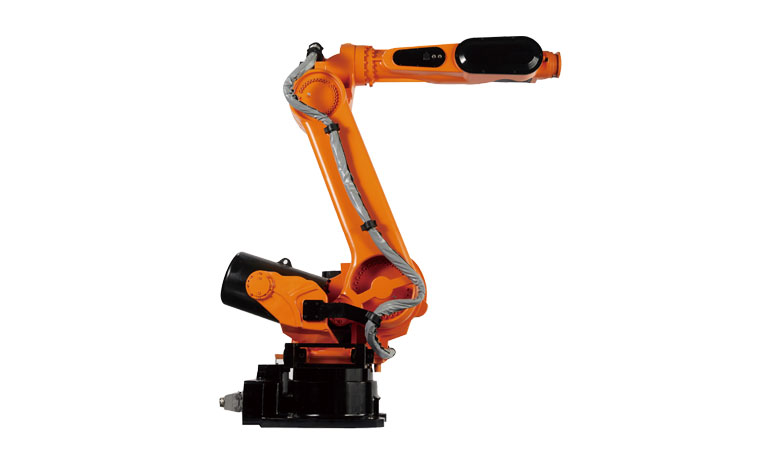







The Development and Transformation of Palletizing Robots in the Industry
2021-11-11

There are four main palletizing methods currently used by most companies: first, traditional manual palletizing; second, high-bay palletizing machines; third, palletizing robots; and fourth, fully automated palletizing equipment.
So why do companies purchase palletizing robots? Is it simply because they're automated, making the work easier and simpler?
Of course not. If palletizing robots could only offer such limited benefits, I believe no company would be willing to spend a large sum to purchase these automated palletizing robots. So what advantages do companies actually value in palletizing robots?
Increasing palletizing efficiency is the fundamental advantage of palletizing robots. In particular, they can configure optimal palletizing quantities based on customer needs, maximizing the number of pallets produced per cycle while ensuring high-quality results. This allows them to fulfill automated palletizing requirements in a shorter amount of time.
Palletizing is physically demanding work that human labor cannot sustain for long periods. Palletizing robots, however, are capable of providing 24-hour continuous operation while ensuring high palletizing accuracy. These are advantages that human labor simply cannot match.
Palletizing robots offer six major advantages over mechanical equipment:
1. Simple construction, few components, and low failure rate
2. Compact footprint, facilitating production line layout in factories and the retrofitting of existing production lines
3. High adaptability. When a customer's product specifications, volume, shape, or pallet dimensions change, only a software adjustment is required, without affecting production efficiency
4. Low energy consumption, which significantly reduces a company's operating costs.
5. Reduced safety incidents, particularly injuries and fatalities caused by improper operation;
6. One-button control system for simple and convenient operation.
Palletizing is a key application area for robots, serving production lines in industries such as chemicals, building materials, food, and healthcare for the stacking and loading/unloading of materials and goods.
The development of fully automated palletizing robots requires new breakthroughs, new directions, and new development goals in technical research. We must continue to strive for a brighter future, advance new production technologies, share market opportunities and new breakthroughs, and pursue further growth.
The overall development of enterprises has reshaped the direction of palletizing robot technology, making the future of these robots clearer. By understanding market demands and providing robotic equipment that aligns with market trends, companies can build a strong foundation for their own growth.