






What are the advantages of robots used with CNC lathes?
2021-10-23

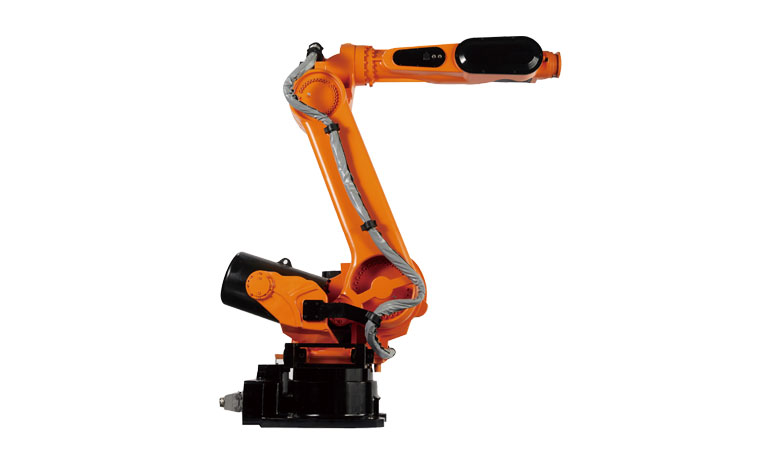
CNC lathe robots are also commonly referred to as CNC machine tool robots. Machine tool robots and lathe robots refer to automated devices capable of automatically loading and unloading parts on CNC lathes, independently clamping workpieces, and automatically blowing away chips and debris. They also place finished parts into storage bins and perform other continuous automated operations. These robots have now completely replaced manual labor. If we were to classify them, we could divide them into standalone CNC lathe robots, dual-machine versions, and multi-machine versions. For more specific details, you’ll need to research them on your own.
As industrial robots, CNC lathe robots have gained widespread popularity in the CNC industry in recent years due to their simple structure. They also play an extremely important role in the intelligent development of machine shops.
CNC lathe robots primarily consist of an end-effector and a motion mechanism. The end-effector is the component used to grasp tools; it typically comes in various structural configurations depending on the shape, size, weight, and material of the object to be grasped, as well as the specific operational requirements. The motion mechanism enables the end-effector to perform various movements, allowing it to change the position and orientation of the gripped object.
The so-called degrees of freedom (DOF) of a robotic arm refer to the independent movements of the motion mechanism, such as lifting, extending, retracting, and rotating. Generally, to grasp objects at any position or orientation in space, a robotic arm must have at least six degrees of freedom. Degrees of freedom are a key metric in the design of automated robotic arms; generally, the higher the number of degrees of freedom, the greater the flexibility and versatility of the robotic arm, though its structure also tends to be more complex.
CNC machine tool robots can be effectively utilized across various industries to meet production needs. With their numerous functions, they have significantly driven the rapid development of China’s industrial sector, enabling it to continuously reach new heights. To date, the machine tool automation industry has become a mainstream force in economic development, providing substantial support to the nation’s economic growth.