






Analysis of Common Faults in Welding Robots
2019-03-28

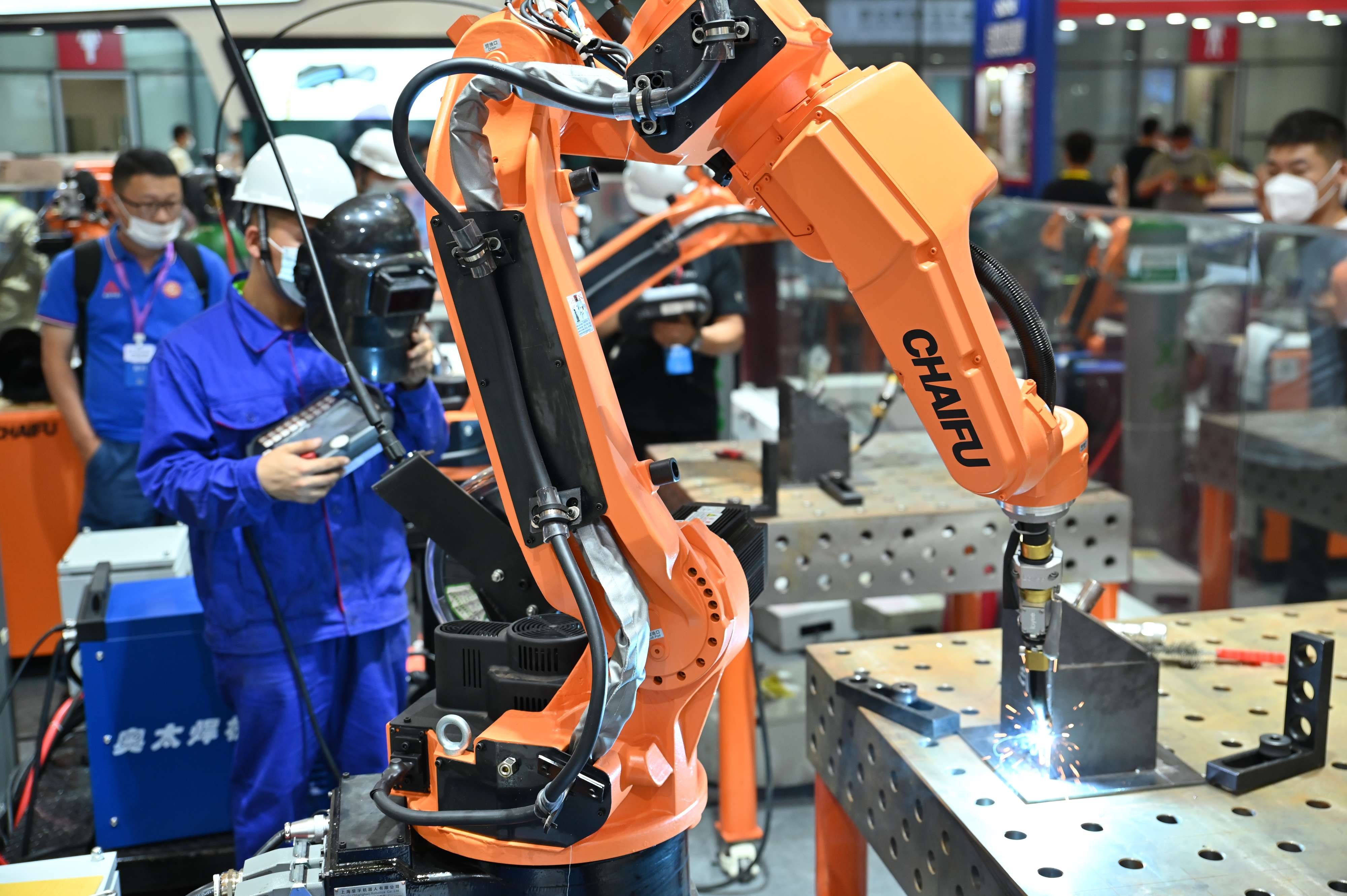
With social progress, the age of automation is gradually approaching us. For example, welding robots appearing in major industrial sectors have virtually eliminated the need for manual labor. The welding robots we commonly see generally use CO₂ gas shielded arc welding. Common welding defects that occur during the welding process include weld offset, undercut, and porosity, among others. A detailed analysis is as follows:
1) Weld deviation may result from an incorrect welding position or issues with the welding torch's pathfinding. In this case, check whether the TCP (Torch Center Point) is accurate and make adjustments as needed. If this occurs frequently, inspect the zero positions of the robot’s axes and recalibrate them to correct the issue.
2) Undercut may result from improper welding parameters, incorrect torch angle, or incorrect torch position. Adjust the power level to modify the welding parameters, and adjust the torch orientation as well as its relative position to the workpiece.
3) Porosity may result from poor gas shielding, a primer coat that is too thick on the workpiece, or insufficiently dry shielding gas. This can be addressed by making the appropriate adjustments.
4) Excessive spatter may be caused by improper welding parameters, gas composition issues, or excessive wire stick-out. You can adjust the power level to modify the welding parameters, use the gas mixer to adjust the mixed gas ratio, and adjust the relative position of the welding torch to the workpiece.
5) An arc crater may form at the end of the weld after cooling. To fill it, add a crater filling function to the work step during programming.
II. Common Faults in Welding Robots
1) Torch collision. This may be caused by assembly deviations in the workpiece or an inaccurate torch TCP. Check the assembly or correct the torch TCP.
2) Arc failure; unable to strike an arc. This may be due to the welding wire not contacting the workpiece or process parameters being too low. Manually feed the wire, adjust the distance between the torch and the weld seam, or adjust the process parameters as appropriate.
3) Shielding gas monitoring alarm. This may be caused by a fault in the cooling water or shielding gas supply; check the cooling water or shielding gas lines.
Summary: Although welding robots have accelerated work efficiency across various industries, improper use of these robots can easily lead to safety hazards. Therefore, it is essential to understand the common faults associated with welding robots so that appropriate measures can be taken to address them and implement preventive safety measures.