










The Ultimate Guide to Industrial Robot Arms: Types, Applications, and ROI
2026-09-02

Target Keywords: Industrial Robot Arm, Factory Automation, Robotic Welding, Machine Tending, Palletizing Robot, Automation ROI
1. Introduction: The Modern Industrial Automation Imperative
The global manufacturing landscape is undergoing a structural transformation. Driven by severe skilled labor shortages, rising operational costs, and stringent quality demands, factory automation is no longer an optional upgrade—it is a core competitive necessity. At the heart of this revolution is the industrial robot arm.
Modern robotic articulators are sophisticated, highly programmable mechatronic systems engineered to execute repetitive, high-precision, and heavy-duty tasks with zero fatigue. From high-speed pick-and-place electronic assembly to heavy-duty automotive chassis welding, robotic automation maximizes production line throughput while drastically minimizing human error and workplace hazards.
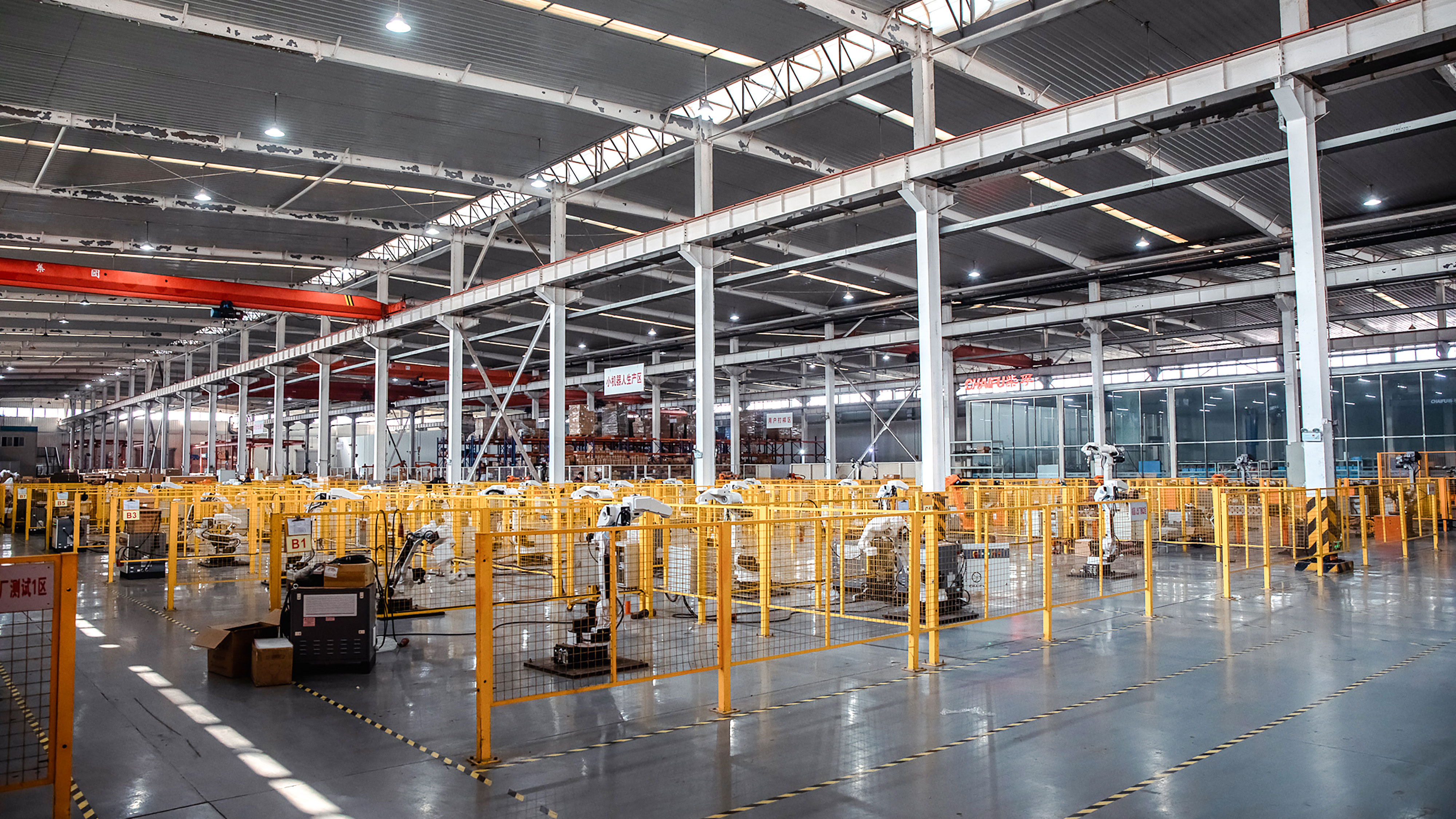
2. Classifications of Industrial Robots
Selecting the optimal robotic kinematic structure depends heavily on the specific degree-of-freedom (DoF) requirements, payload capacity, working envelope, and cycle time constraints. Below is a breakdown of the primary industrial robot architectures.
| Robot Architecture | Kinematic Structure | Typical Payload | Primary Strengths | Key Applications |
| 6-Axis Articulated | Rotary joints (6 DoF) | 3 kg – 6,000+ kg | Maximum dexterity, full 3D spatial reach, flexible mounting. | Arc Welding, Machine Tending, Milling, Spray Painting. |
| SCARA | 2 Parallel rotary joints + 1 linear axis | 1 kg – 50 kg | Extremely high speed, excellent Z-axis rigidity, compact footprint. | Pick & Place, PCB Assembly, Screwdriving, Dispensing. |
| 4-Axis Palletizing | Parallel linkage / Articulated | 50 kg – 800+ kg | High payload capability, rapid acceleration, long vertical reach. | End-of-Line Palletizing, Bag Stacking, Heavy Material Handling. |
| Delta (Parallel) | Parallelogram arm structure | 0.5 kg – 10 kg | Ultra-high operational speed, low moving inertia. | High-speed Sorting, Food Packaging, Pharmaceutical Inspection. |
Detailed Structural Analysis
6-Axis Articulated Robots: Representing over 60% of global industrial installations, 6-axis arms mimic human arm motion. They utilize high-precision cycloidal or harmonic drive reducers driven by AC servo motors to provide dynamic motion control in complex 3D contours.
SCARA Robots (Selective Compliance Assembly Robot Arm): SCARA robots offer horizontal elasticity combined with vertical stiffness, making them ideal for high-speed insertion tasks where micro-alignment is required.
3. Primary Industrial Applications
3.1 Robotic Arc Welding & Cutting
Weld consistency is vital in structural steel and automotive manufacturing. Robotic arc welding systems integrate power sources, wire feeders, torch cleaners, and multi-axis manipulators. Advanced seam-tracking sensors dynamically adjust the torch positioning in real-time, delivering flawless weld penetration and eliminating human exposure to toxic fumes and UV radiation.
3.2 CNC Machine Tending
Machine tending automation addresses the idle time inherent in manual CNC lathes and machining centers. A 6-axis robot integrated with a dual-gripper End-of-Arm Tooling (EOAT) can unload a finished component and load a raw blank in under 10 seconds. This enables "lights-out manufacturing", allowing production lines to run unstaffed through night shifts.
3.3 Heavy Palletizing & Material Handling
End-of-line packaging lines require sustained, heavy lifting. High-payload palletizing robots fitted with vacuum arrays or mechanical clamping grippers handle multi-size cartons, bags, and drums, stacking them onto pallets with millimeter accuracy to optimize logistics space.
3.4 Robotic Milling, Deburring & Polishing
Equipped with high-rigidity gearboxes and high-frequency electric spindles, 6-axis robots are increasingly replacing conventional 5-axis CNC machines for large-scale milling, trimming, and surface finishing of composites, aluminum, and plastics at a fraction of the capital equipment cost.
4. Technical Components & Working Principles
An industrial robot operates through a synchronized ecosystem of mechanical and electrical components:
Servo Drives & Servo Motors: The closed-loop muscular control system. High-resolution optical or magnetic encoders feedback position and velocity data thousands of times per second.
Precision Reducers (RV Cycloidal & Harmonic Gearboxes): Convert high-speed, low-torque motor rotation into high-torque, low-speed robotic motion while maintaining backlash below 1 arc-minute.
Robot Controller: The central brain processing motion trajectories, kinematic calculations, safety zone monitoring, and industrial fieldbus protocols (EtherCAT, PROFINET, Ethernet/IP).
5. Quantifying Automation Value: ROI & Cost Analysis
Evaluating a robotic automation project requires calculating both direct operational savings and indirect quality gains.
Key Financial Justification Metrics:
Direct Labor Displacement: Reduction in direct operator hours and overhead (benefits, training, insurance).
Throughput Increase: Higher unit production per hour resulting from consistent cycle times.
Scrap & Rework Reduction: Elimination of manual variance leading to lower raw material waste.
Downtime Prevention: Continuous multi-shift operation without fatigue-induced slowdowns.
Standard ROI Formula
Where Total Investment includes the robot arm, EOAT, safety guarding, and system integration costs, while Net Cash Inflow accounts for annual labor savings minus annual maintenance expenses. Typical payback periods for industrial robot implementations range from 12 to 24 months.
6. Selection & Deployment Checklist
Payload (kg): Calculate total weight including part weight AND grippers/fixtures attached to the tool flange.
Reach & Working Envelope (mm): Map 3D spatial boundaries to avoid mechanical dead zones.
Repeatability (mm): Verify required tolerance ±0.02 mm for assembly vs. ±0.08mm for palletizing).
Ingress Protection (IP Rating): Match environmental conditions (e.g., IP67 for liquid coolants in CNC environments, IP65 for dust).
Integration & Safety: Ensure compliance with ISO 10218 and ISO 13849 safety standards using physical fencing, light curtains, or area laser scanners.
7. Conclusion
Implementing industrial robot arms is a proven path toward achieving manufacturing resilience, operational agility, and sustainable profitability. By selecting the correct kinematic structure, matching the application requirements, and executing a sound integration strategy, manufacturers can ensure long-term automation success.



.png)


