






Main Applications of Palletizing Robots
2019-03-28

With the rapid advancement of technology, relying on manual labor to manufacture bulk and large-scale products clearly cannot meet the needs of businesses. Consequently, the first robot was developed in the 1960s. After many years of research and refinement, industrial robots in particular have gradually been applied in a wide range of fields, such as manufacturing, healthcare, logistics, the automotive industry, space exploration, and diving.
The development of industrial robots has solved many problems that human labor cannot address, and their production efficiency is unmatched by human labor, thereby indirectly reducing labor costs and improving production efficiency. The Robotics Industry Association of the United States defines a robot as “a reprogrammable, multifunctional manipulator used to handle materials, parts, tools, etc., or specialized equipment that performs various tasks through the debugging of different programs.” For a country, the number of robots in operation reflects, to a certain extent, the level of development of its productive capacity.
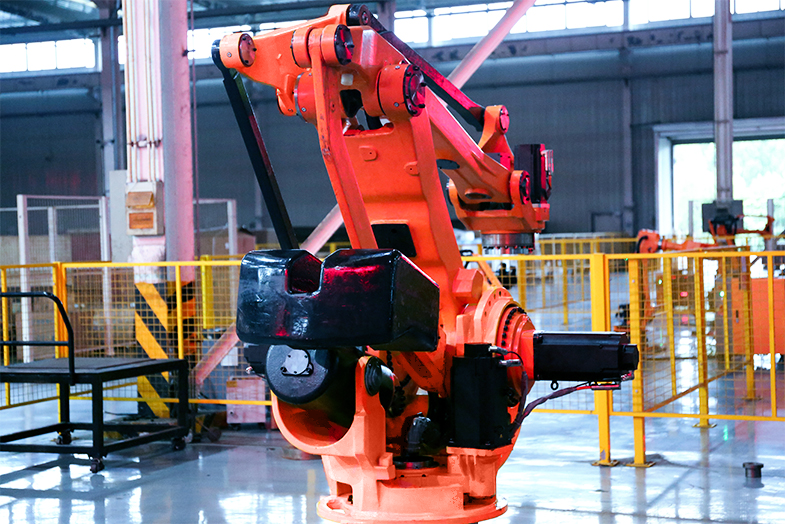
Robotic palletizing is primarily used in the logistics industry and serves as a classic example of industrial robot applications. The purpose of palletizing is to arrange piles of items into stacks according to a specific pattern based on the concept of unitized integration, making the items easier to handle, unload, and store. During the transportation of goods, with the exception of bulk or liquid items, most goods are stored and transported in palletized form to save space and accommodate larger cargo volumes.
Traditional palletizing is performed manually. In many cases, this method cannot keep pace with today's high-tech advancements. When production line speeds are too high or product sizes are too large, manual labor struggles to meet the demands. Furthermore, manual palletizing requires a large workforce, resulting in high labor costs, yet fails to improve production efficiency.
To improve the efficiency of handling and unloading, enhance palletizing quality, reduce labor costs, and ensure the safety of employees, research into palletizing robots has become critically important. In recent years, factory automation equipment in China has become increasingly advanced, necessitating higher logistics efficiency to reduce production costs. Automatic high-speed palletizing robots are being used more and more widely. However, China's current level of development in this field remains relatively low compared to that of other countries. Many of the palletizing robots used in Chinese factories are imported from abroad, while domestically developed brands are relatively few. Therefore, addressing the current challenges in the domestic development of palletizing robots and creating models suited to the production needs of Chinese factories holds significant practical importance.