






Analysis of Industrial Robots by Shanghai ChaiFu
2019-04-19

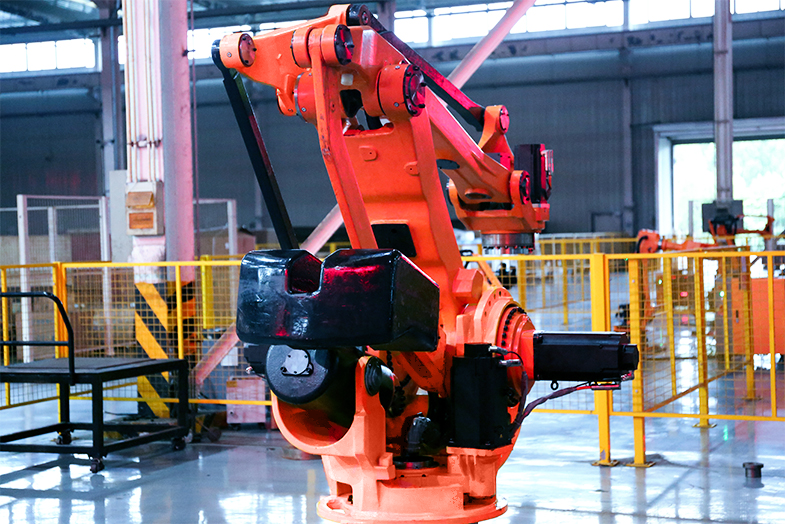
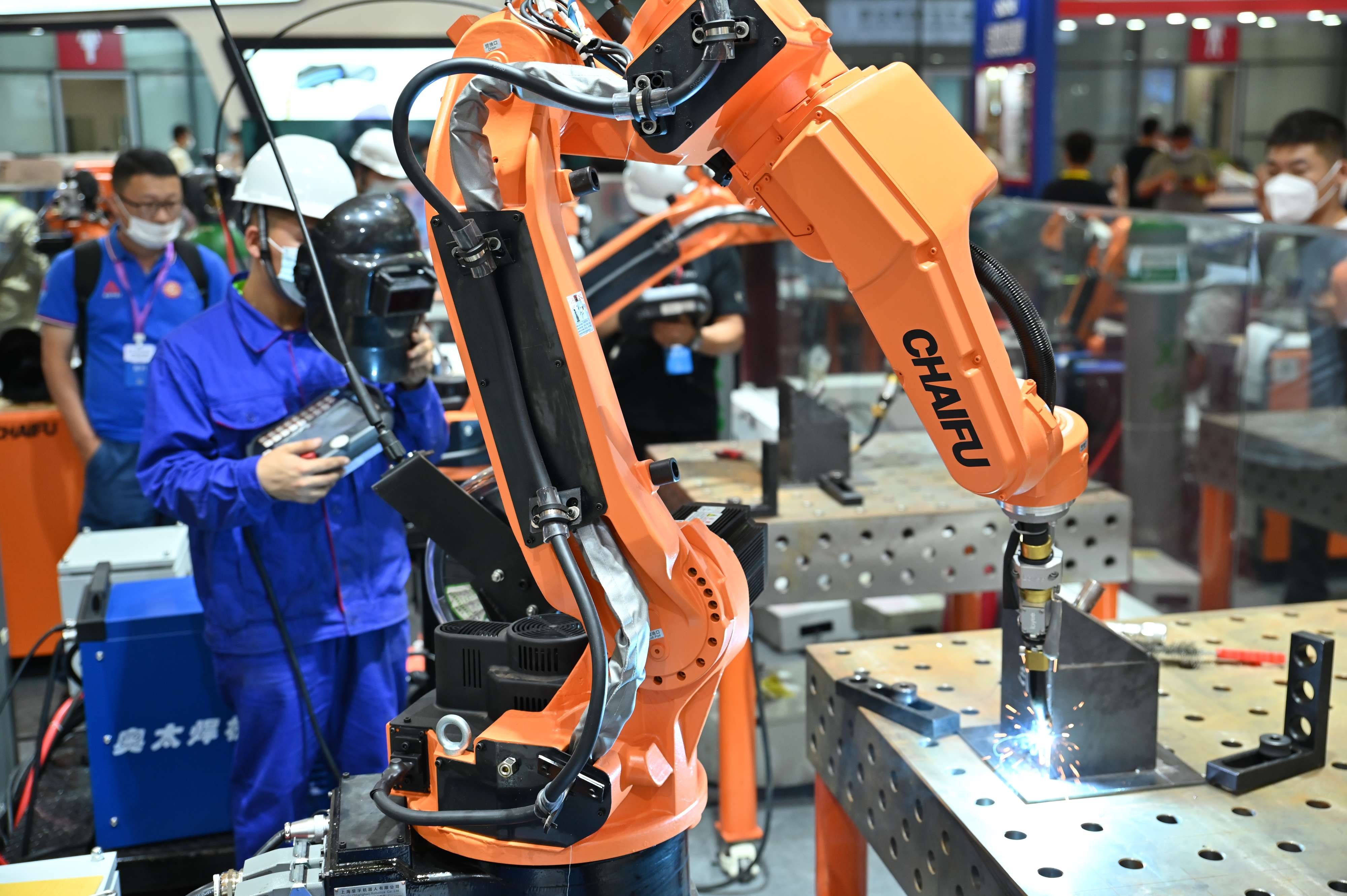
An industrial robot is a machine that performs various functions using its own power and control capabilities; it can accept commands from humans or operate according to pre-programmed sequences. A material-handling robot is an industrial robot capable of performing automated material-handling tasks.
Handling operations refer to the use of equipment to grip workpieces and move them from one processing location to another. Handling robots can be equipped with different end-effectors to handle workpieces of various shapes and conditions, thereby significantly reducing the burden of heavy physical labor on humans. Currently, there are over 100,000 material-handling robots in use worldwide, applied in machine tool loading and unloading, automated stamping production lines, automated assembly lines, palletizing and handling, and the automated handling of containers. Some developed regions have established maximum limits for manual handling; tasks exceeding these limits must be performed by material-handling robots.
Material-handling robots involve disciplines such as mechanics, mechanical engineering, electrical, hydraulic, and pneumatic technologies, automatic control technology, sensor technology, microcontroller technology, and computer technology. As a high-tech innovation in the field of modern automatic control, they have become an integral part of modern mechanical manufacturing production systems. Their advantage lies in their ability to perform various predefined tasks through programming, combining the respective strengths of humans and machines in terms of structure and performance, and particularly demonstrating artificial intelligence and adaptability.
The application of machine vision in industrial robots is already widespread. There are three categories of industrial robot vision: 2D vision, stereoscopic 3D vision, and 3D vision utilizing wide-area sensor technology. These technologies enable industrial robots to identify the position, size, and color of objects—including their spatial location—thereby granting the robots the ability to perceive their surrounding environment.
With 3D vision, the robot’s capabilities are further expanded; it can pick up haphazardly stacked workpieces, eliminating the need for workers to organize them on the assembly line. Vision-equipped robots can quickly detect existing workpieces and identify their positions. In addition to vision, robots also need to sense forces in their surroundings—particularly during assembly and contact operations—to determine how much force to apply to an object. Such sensors are essential for intelligent robots.
By installing six-axis force sensors on the wrist of an industrial robot, the robot can perceive the force applied during its movements, enabling it to perform more complex tasks. Both 3D force sensors and six-axis force sensors are crucial sensing components for robots. Currently, Fanuc has developed a wide range of sensor series that can be configured for various application scenarios.